Dec 2, 2025
A Bavarian Forest Christmas: Where Alpine Adventure Meets Winter Sanctuary
The Bavarian Alps follow Germany's southern border with Austria, presenting some of the country's most arresting topography. Yet it's not the famous peaks alone that captivate it's the valleys between them. Protected meadows at precise altitudes, ancient conifer forests, and lakes fed by mountain streams create microclimates of remarkable tranquility.
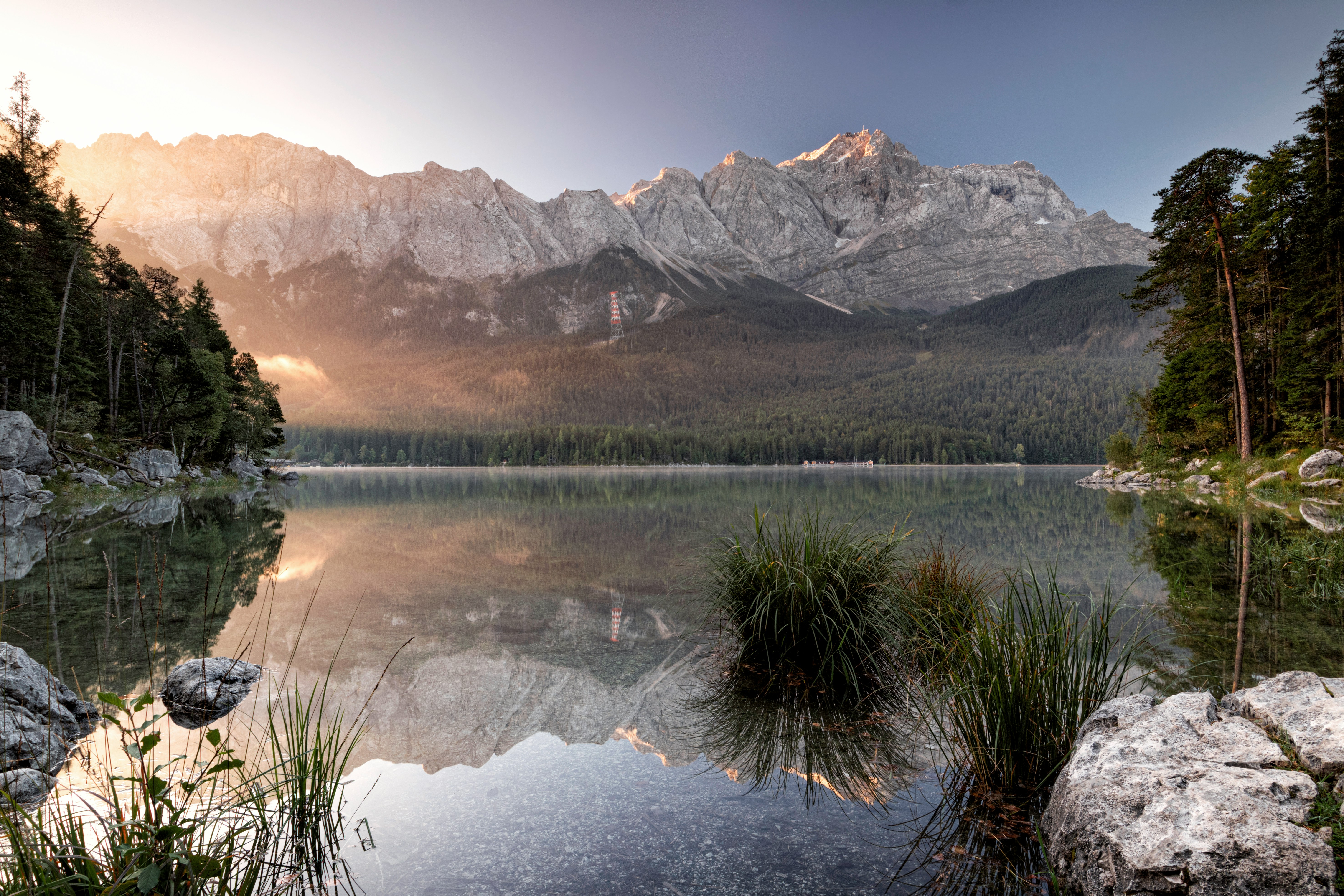
The region surrounding Garmisch-Partenkirchen and the quieter valleys near Elmau and Tegernsee represents Bavaria's alpine soul without the alpine circus. Zugspitze (Germany's highest peak at 2,962 metres) dominates the skyline, while below, these valleys remain remarkably undiscovered despite proximity to Munich—just 90 minutes by car, yet worlds apart in atmosphere.
Winter Activities
Partnach Gorge: Ice Architecture at Its Finest
Location: 2km from Garmisch-Partenkirchen Olympic Ski Stadium, accessed via marked winter path
Why visit: This isn't merely a frozen gorge—it's nature as sculptor. Water cascading through narrow rock walls freezes mid-flow, creating ice formations suspended in defiance of gravity. Icicles stretch floor to ceiling, some thick as ancient columns, others delicate as Venetian glass.
Details: The maintained lower path remains accessible throughout winter (€6 entry), allowing close observation without technical climbing. The scale is extraordinary—walking through feels less like a hike than entering a natural cathedral, one rebuilt each winter in slightly different form.
Best time: Mid-morning when low sun angles through the gorge, illuminating ice in shades of blue rarely seen elsewhere.
Lake Eibsee Circuit: Bavaria's Turquoise Jewel
Location: 8km from Garmisch, accessible via bus 3 to Eibsee station
Why visit: Called Bavaria's most beautiful lake with justification. The water maintains an almost tropical turquoise even in winter, creating surreal contrast against snow-covered shores and Zugspitze rising directly behind.
Details: The 7.5km lakeside trail remains clear throughout winter, offering a rare combination: dramatic alpine scenery without the altitude commitment. Walk counter-clockwise for the best photographic angles early in the route.
What distinguishes it: Accessibility meeting genuine beauty. No cable cars required, no technical skills needed, yet the views rival anything requiring far greater effort. Families appreciate the flat terrain; photographers appreciate the constantly shifting light on Zugspitze's north face.
Kramerplateau Red Deer Feeding
Location: Accessible via Kramerplateauweg trail from Garmisch
Why visit: Most wildlife viewing requires luck, patience, and often disappointment. This reverses the equation. Scheduled feeding times mean guaranteed sightings of over 150 free-range red deer in their natural environment.
Details: The hike to the feeding station provides wheelchair and pushchair access, making it genuinely inclusive. Rangers provide insights into alpine ecology, migration patterns, and how these populations survived centuries of pressure.
Best time: Late afternoon when deer are most active and alpine light turns golden.
Tannenhütte Winter Hike
Location: Wankbahn cable car upper station (1,531m), southern slopes of Wank Mountain
Why visit: This represents the ideal of Bavarian winter hiking: accessible enough for most fitness levels, rewarding enough to feel earned. The cable car eliminates the altitude gain, yet maintains the mountain experience.
Details: The circuit from Tannenhütte to Eckenhütte traverses sun-exposed southern slopes, maximizing warmth and views while minimizing avalanche risk. Tannenhütte serves as both destination and waypoint, offering traditional Bavarian fare on a sunny terrace where locals and visitors share tables.
What makes it essential: The hut culture and the walk itself—through snow-laden forests opening periodically to panoramic vistas—embody why people come to Bavaria in winter. Not for extreme adventure, but for beauty approached at human pace.
Where to Stay
Schloss Elmau
Location: Elmau Valley, 1,000m altitude | 100km from Munich
Overview: Having hosted two G7 Summits, Schloss Elmau occupies a category beyond typical alpine hotels. The property comprises two distinct hotels (The Hideaway and The Retreat) offering 147 rooms and suites.
Highlights:
Up to 220 concerts per year with world-renowned artists
Two libraries and a stunning concert hall
Six separate spas with pools, thermal baths, and Japanese onsen
Four outdoor pools heated year-round (30-35°C)
Two Michelin-star IKIGAI restaurant (Christoph Rainer)
Additional restaurants: Mediterranean to Thai
Complimentary BMW iX electric vehicles for exploring
Experience: The defining winter moment is soaking in outdoor pools beneath starlit skies or gently falling snow, mountains rising on all sides.
Das Kranzbach
Location: Kranzbach Valley, 1,030m altitude | 100km from Munich
Overview: Set within 130,000 square metres of protected alpine meadow, Das Kranzbach occupies a hidden valley so secluded that many Germans don't know it exists.
History: The original Mary Portman House was designed in 1913 by English architects, commissioned by aristocrat Mary Isabel Portman who, due to World War I, never saw her completed retreat.
Accommodation:
31 rooms in stone manor house (Ilse Crawford interiors)
60 modern rooms in Garden Wing with south-facing alpine balconies
Highlights:
All-inclusive: gourmet breakfast, lunch buffet, afternoon tea, five-course dinners
Spa with 27 treatment rooms using water from property's mountain spring
Kengo Kuma's 2018 meditation house hidden within the forest
Two-night minimum stay (philosophy: true restoration requires time)
Spa & Resort Bachmair Weissach
Location: Rottach-Egern, Lake Tegernsee | 50km from Munich
Overview: This renovated 19th-century property achieves genuine luxury while remaining authentically family-friendly.
Accommodation: Rooms feature natural materials (reed linens, warm wood details, soft colour palettes) creating spaces that feel distinctly Tegernsee.
Highlights:
MIZU ONSEN SPA: 3,000 square metres blending mineral-rich Tegernsee waters with Japanese bathing traditions
Separate family spa with indoor pool, outdoor jacuzzi, organic sauna, and infant pool
Seven restaurants and four bars with "dine around" concept
Christmas packages with festive evening menus, spa vouchers, and romantic carriage rides
Where to Dine
Restaurant Hubertusstube, Garmisch-Partenkirchen
Address: Alpspitzstraße 12, 82467 Garmisch-Partenkirchen
Rating: One Michelin star
Cuisine: Chef Andreas Hillejan sources from local alpine farms and hunters, transforming regional classics into refined expressions of place. The seven-course tasting menu changes with the seasons. Winter brings game, root vegetables, and preserved mountain herbs.
Wine: Focuses on Austrian and German producers with sommelier pairings.
Altes Bad Kreuth
Address: Nördliche Hauptstraße 9, 83708 Kreuth
Setting: Former ducal bathing house near Tegernsee dating to 1680.
Cuisine: Chef Martin Fauster combines Bavarian tradition with Mediterranean influence, creating dishes that feel both rooted and innovative. The lunch menu offers exceptional value; dinner becomes an occasion.
Tip: In winter, request a table near the historic ceramic stove.
Why Bavaria
Bavaria's forest retreats represent something increasingly rare: places where doing less becomes not only acceptable but desirable. Where wellness extends beyond spa treatments to encompass entire philosophies. Where winter reveals its contemplative character rather than merely its sporting potential.
Practical Information
From Munich:
Elmau Valley: 100km
Kranzbach Valley: 100km
Lake Tegernsee: 50km
Garmisch-Partenkirchen: ~90 minutes by car
Best time to visit: Mid-January through February for full gorge freezing
Partnach Gorge: €6 entry, accessible throughout winter
